
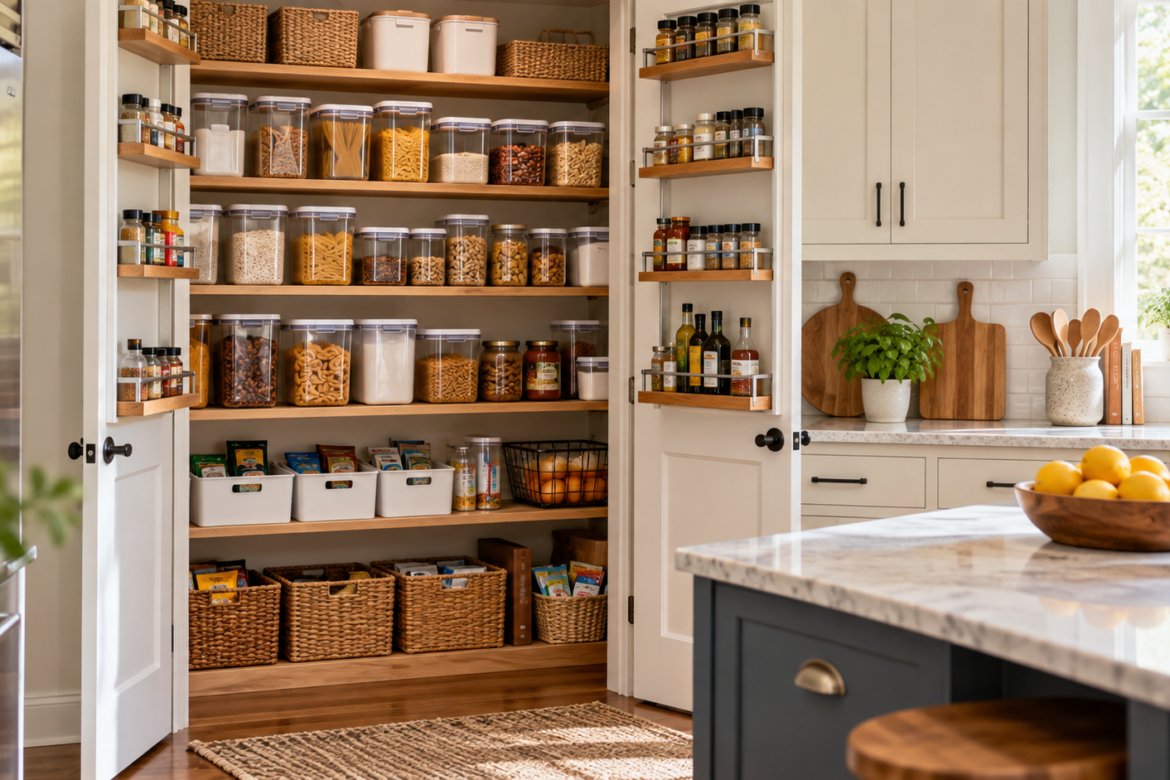
A well-organized pantry saves time, reduces food waste, and makes meal planning easier. Whether you have a dedicated pantry closet, a corner cabinet, or open shelving, the right organization system helps you see what you have, find items quickly, and keep your kitchen running smoothly. This guide walks you through practical steps to organize a pantry that works for your household’s needs and space.
Assess Your Current Pantry Space
Before you start organizing, take time to understand what you’re working with. Measure your pantry dimensions, note the shelf heights, and identify any awkward corners or deep spaces that are hard to access. Look at the lighting—poor visibility makes it difficult to find items and spot expired products. If your pantry lacks good lighting, consider adding a battery-operated light or small LED strip to improve visibility.
Next, evaluate your storage needs. Do you buy in bulk? Do you have dietary restrictions that require specific ingredients? Are there items you use daily versus those you reach for occasionally? Understanding your household’s eating habits and shopping patterns helps you design a system that actually works for your family.
Declutter and Inventory Your Items
Empty your pantry section by section and check expiration dates on all packaged goods, canned items, and spices. Discard anything that’s expired, stale, or no longer used. This step is essential—it reduces clutter and ensures you’re only storing items your household actually eats.
As you remove items, group similar products together: grains and pasta, baking supplies, canned vegetables and fruits, snacks, breakfast items, and condiments. This categorization makes it easier to assign each group a dedicated location in your pantry.
Choose Storage Containers and Organizers
Clear, airtight containers are invaluable for pantry organization. They protect dry goods from pests and moisture, extend shelf life, and make it easy to see when you’re running low on staples like flour, sugar, cereal, or rice. Label each container with the product name and expiration date using a permanent marker or label maker.
Consider using shelf risers or tiered organizers to maximize vertical space and improve visibility. Drawer dividers work well for organizing baking supplies, spice packets, or tea bags. Lazy Susans or turntables are helpful for storing oils, vinegars, and condiments—they make it easy to access items at the back without reaching awkwardly.
For canned goods, use a tiered shelf organizer or a simple can dispenser that allows you to load cans from the top and remove them from the front. This system ensures older cans are used first and prevents items from getting lost in the back.
Arrange Items by Frequency of Use
Place items you use daily at eye level and within easy reach. This includes everyday staples like cooking oils, salt, and frequently used spices. Items used occasionally can go on higher or lower shelves, and rarely used specialty ingredients can be stored in less accessible spots.
Keep breakfast items together on one shelf so family members can easily find cereal, oatmeal, and other morning staples. Group baking supplies on another shelf, and dedicate space for snacks that kids or adults reach for regularly. This logical arrangement reduces time spent searching and makes restocking easier.
Manage Deep Shelves and Corner Spaces
Deep pantry shelves can become black holes where items get lost. Use pull-out baskets or sliding organizers to make items at the back easily accessible without having to reach far into the shelf. These simple tools prevent forgotten items and make better use of available space.
Corner shelves are often wasted space. A corner shelf organizer or a small rolling cart can transform these awkward areas into functional storage for less frequently used items or bulk purchases.
Label Everything Clearly
Labels are the backbone of a maintainable pantry system. Label shelves to indicate what belongs in each section—”Grains,” “Canned Vegetables,” “Baking Supplies,” and so on. Label individual containers with contents and expiration dates. This clarity helps family members put items back in the right place and reminds you when to replace staples.
Consider using a label maker for a polished look, or use masking tape and a permanent marker for a quick, budget-friendly option. The method matters less than consistency—whatever system you choose, stick with it.
Maintain Your Organized Pantry
Organization is only effective if you maintain it. Spend a few minutes each week returning items to their designated spots and checking for expired products. When you bring groceries home, immediately transfer items to appropriate containers and label them. Before your next shopping trip, do a quick inventory to see what needs replenishing.
Set a reminder to do a deeper pantry review every few months. Check for spills, pest activity, or moisture issues, and reorganize as needed. A well-maintained pantry stays functional and continues to save you time and money.
Conclusion
Organizing a pantry is a practical investment in your household’s efficiency and food safety. By assessing your space, decluttering, choosing the right storage tools, and maintaining a logical system, you create a pantry that works for your family. The result is easier meal planning, less food waste, and a kitchen that runs more smoothly every day.
Related Storage Solutions
Explore these related products from SpaceAim:
Leave a comment